What Kids Really Learn by Building and Programming Robots
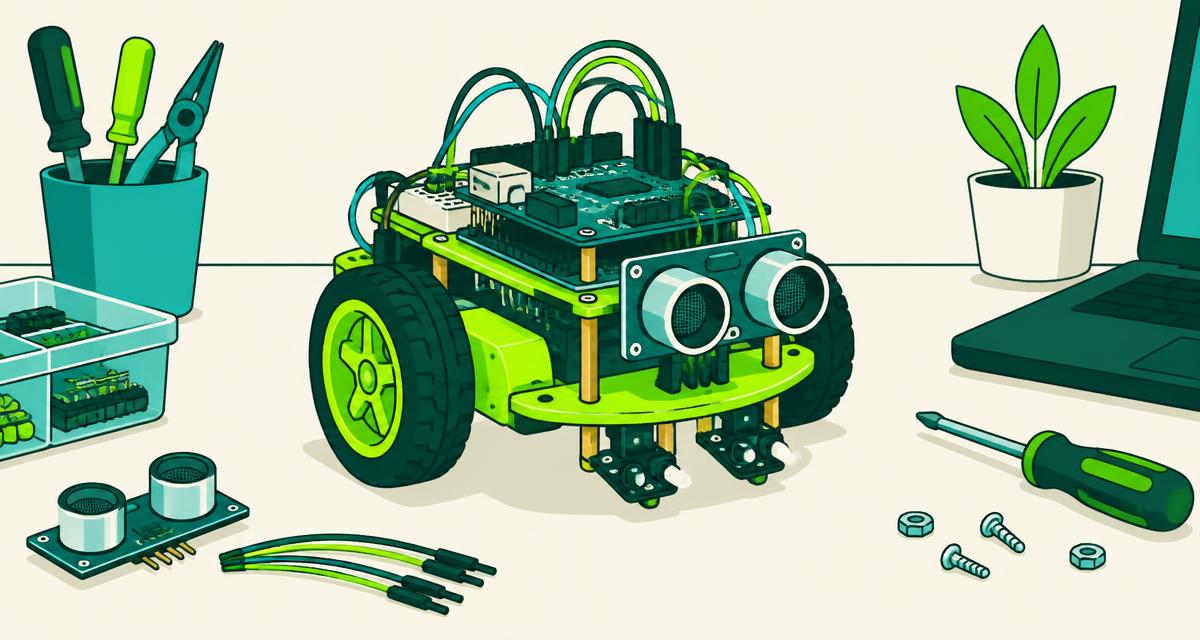
A robot is one of the few projects where a child sees code leave the screen and change something in the real world. When a robot drives, turns or stops because of instructions a student wrote, the connection between logic and outcome becomes obvious. Here's what happens in the RunTheCode Robotics Lab.
Building: mechanics before code
Every robot starts as a physical build. Students attach motors, wheels and frames, and quickly learn that design choices have consequences: a robot that's too heavy moves slowly, a loose axle wobbles, and a wide base is more stable than a narrow one.
Wiring: how electricity gets things moving
Connecting motors and sensors to a controller introduces basic electronics: power, ground, inputs and outputs. Students learn why a connection must be secure and how to trace a circuit when something doesn't respond.
Programming: sensors and decisions
Sensors let a robot notice the world — distance, light, touch or lines on the floor. Programming them teaches conditional logic in the most concrete way possible: if the distance sensor reads close, stop and turn. This is the heart of automation.
- Inputs: what the robot senses
- Logic: what the robot decides
- Outputs: what the robot does
Testing: the real lesson
Robots rarely work perfectly the first time. A turn is too wide, a sensor reads the wrong surface, or the battery runs low. Testing, observing and adjusting is the engineering cycle in miniature, and it teaches kids that a failed attempt is information, not defeat.
Why teamwork is built in
In small groups, students divide roles — builder, programmer, tester — and have to explain their ideas to each other. Communicating a technical plan clearly is a skill that matters in school and later at work.
Ready to start building?
After-school, homeschool and summer programs for ages 6–15 in Davenport, FL.