Engineering for Kids: Structures, Circuits and Mechanisms
Engineering isn't about knowing the right answer — it's about designing something, testing it, and making it better. That cycle is what we practice in the RunTheCode Engineering Lab, through challenges built around structures, circuits and mechanisms.
The design cycle
Engineers follow a simple loop: understand the problem, sketch a plan, build a prototype, test it, and improve it. Kids who learn this loop start applying it everywhere, from school projects to fixing a broken toy.
- Ask
- Imagine
- Plan
- Build
- Test
- Improve
Structures: why shapes matter
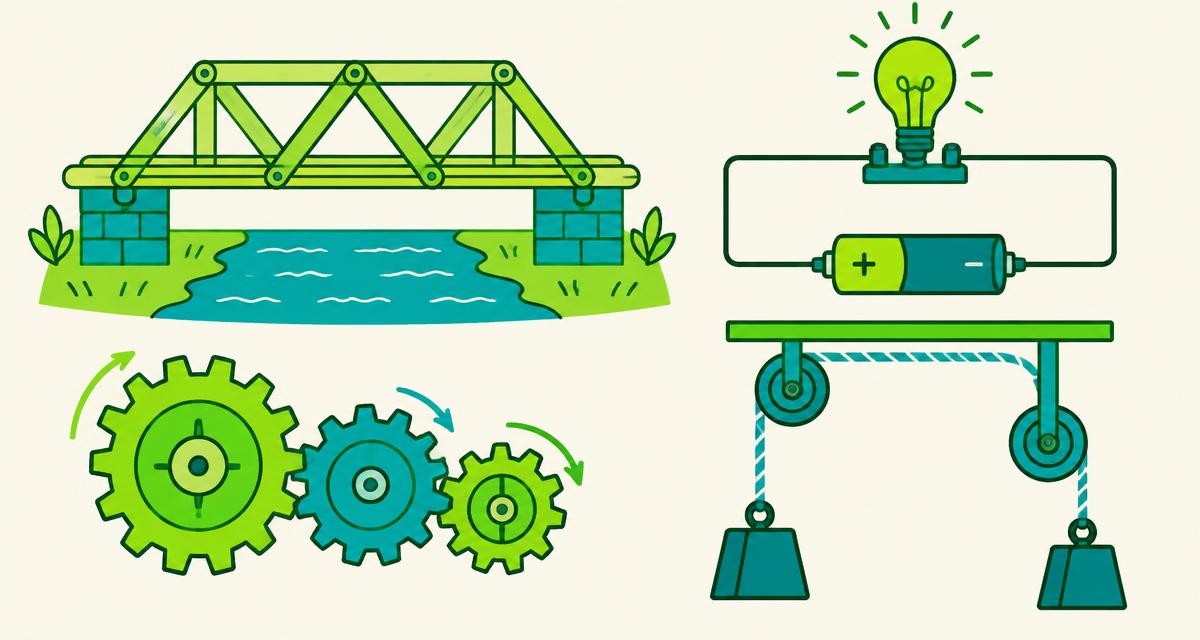
Building a bridge or tower from simple materials shows why triangles are so common in real structures: they keep their shape under load, while squares can collapse sideways. Students test how much weight their design holds, then redesign to hold more.
Circuits: making a complete loop
A simple circuit with a battery, wire and bulb or LED teaches the most important idea in electronics: current only flows through a complete path. From there, students add switches and explore series and parallel connections.
Mechanisms: gears, levers and pulleys
Simple machines show how engineers trade force for distance. A large gear turning a small one increases speed; a pulley lets you lift more with less effort. Seeing it work by hand makes the idea stick far better than a diagram.
Try this at home
Give your child 20 sheets of paper and some tape, and challenge them to build the tallest free-standing tower. Then ask: what would you change to make it taller? That question is engineering.
Ready to start building?
After-school, homeschool and summer programs for ages 6–15 in Davenport, FL.