From Scratch to Python: A Coding Path for Ages 6–15
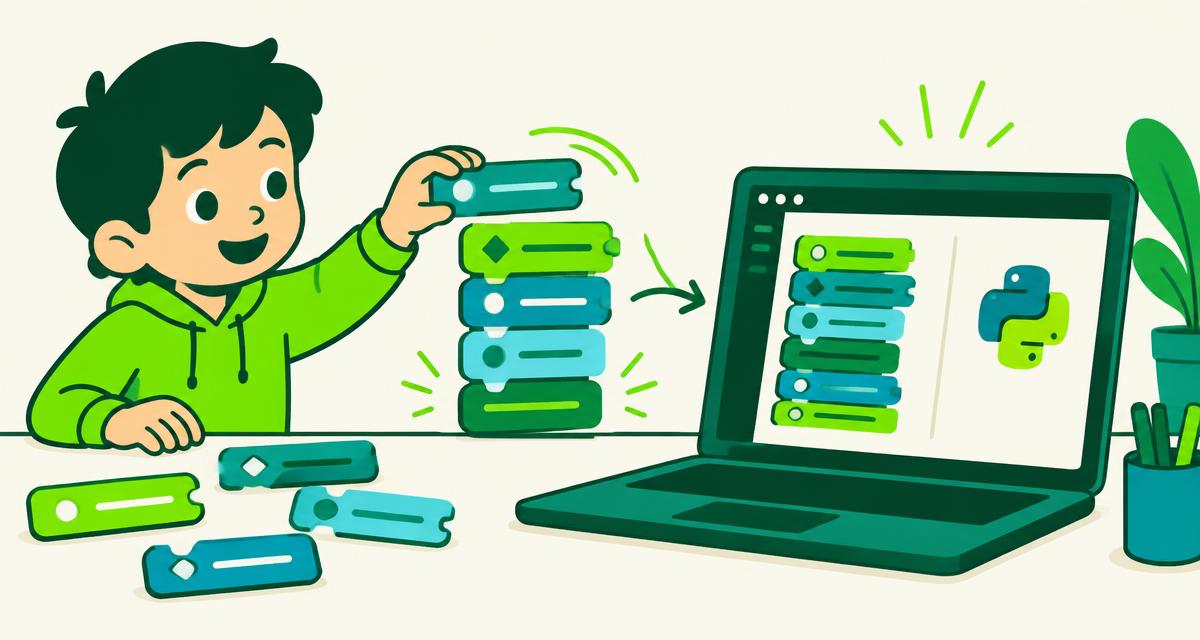
Parents often ask when their child is "ready" to learn to code. The honest answer is that most kids are ready as soon as they can follow a sequence of steps. What changes with age isn't whether they can code, but which tools fit their reading level, patience and goals. Here is the path we follow in the RunTheCode Coding Lab, and why each stage matters.
Stage 1: Thinking in steps with block coding
Scratch, created at the MIT Media Lab, lets children snap together colored blocks to make characters move, talk and react. Because there's no typing and no syntax errors, younger students can focus entirely on logic: what happens first, what repeats, and what should happen only when something is true.
Block coding isn't a toy version of programming. The ideas it teaches — sequences, loops, conditions, events and variables — are the same ideas used in every professional language. A child who builds a Scratch game with a score counter has already used a variable.
- Sequencing: putting instructions in the right order
- Loops: repeating actions without rewriting them
- Conditionals: if this happens, do that
- Events: responding to a click, a key or a collision
- Debugging: finding out why the program didn't do what you expected
Stage 2: The jump to typed code
Once a student is comfortable reading and typing, the next step is a text-based language. Python is a popular first choice because its syntax is short and readable, and it's used in real fields from data science to automation. The same loop that was a block in Scratch becomes a few lines of text.
This stage is where frustration can appear: a missing colon or bracket stops the program. That's normal, and it's an important lesson. Learning to read an error message, find the problem and fix it builds patience and independence that carry over into schoolwork.
Stage 3: Building for the web
HTML structures a web page, CSS styles it, and JavaScript makes it interactive. Kids love this stage because the result is something they can open in any browser and show family. A personal page about a favorite hobby is a great first project — it combines writing, design and logic.
Where Roblox Studio fits
Roblox Studio uses a language called Luau to script game behavior. For many kids it's the most motivating bridge from blocks to typed code, because they already know the games. Writing a script that opens a door or awards points connects coding directly to something they care about.
What matters more than the language
The specific language matters less than the habit of breaking a big problem into small steps, testing often and not giving up after the first error. That's why our students work on finished projects rather than isolated exercises, at their own pace, with a mentor nearby when they get stuck.
Ready to start building?
After-school, homeschool and summer programs for ages 6–15 in Davenport, FL.